
About · Our story
Started in Chókwè. Still run from Chókwè.
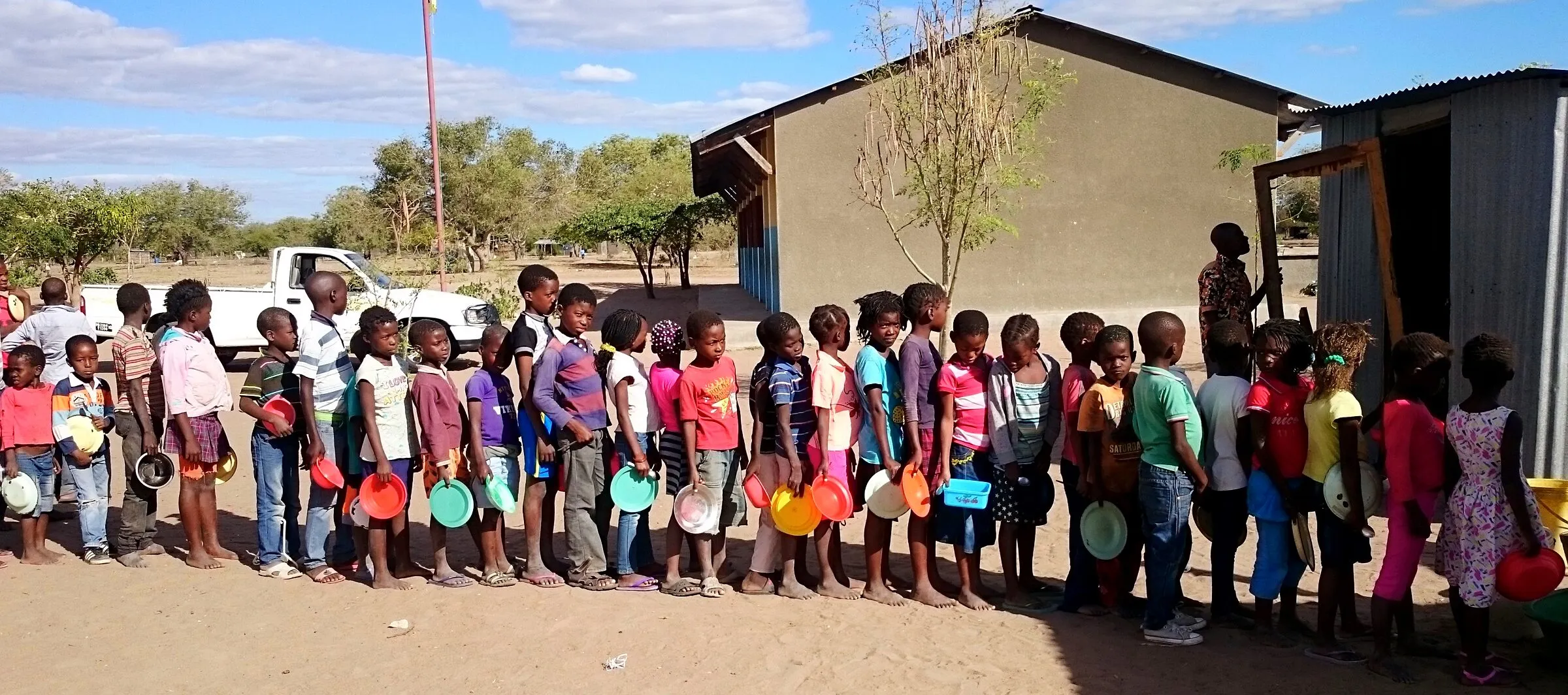
In May 2016, during a drought, MSLI served its first school lunches to 472 children in three schools in Chókwè District, Gaza Province. Today, we are still headquartered in Chókwè, serving 30,000+ children across 6 districts of Gaza Province, Mozambique.
Children were digging up roots to eat.
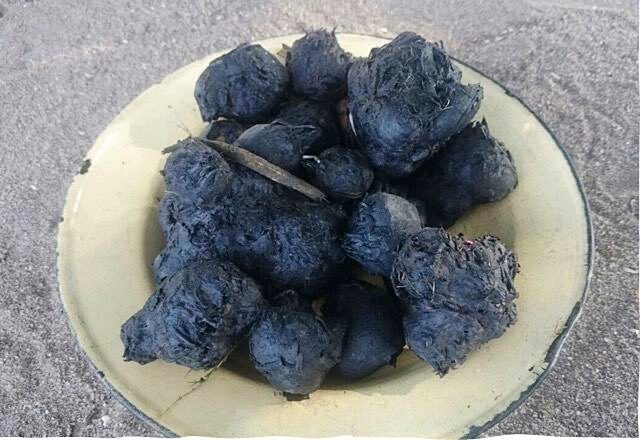
The rains failed to come in April 2015, and the drought that followed was one of the worst in decades. In Chókwè, children left school to look for food. Some dug up nafula, a wild river root, just to have something in their stomachs.
Roberto Mutisse, Talvina Ualane and Cara Myers had worked together in Chókwè's communities since 2013. In May 2016, under an agreement with Chókwè District Education Services, we served our first lunch to 472 children at Candiza, Punguine and Cumba schools.
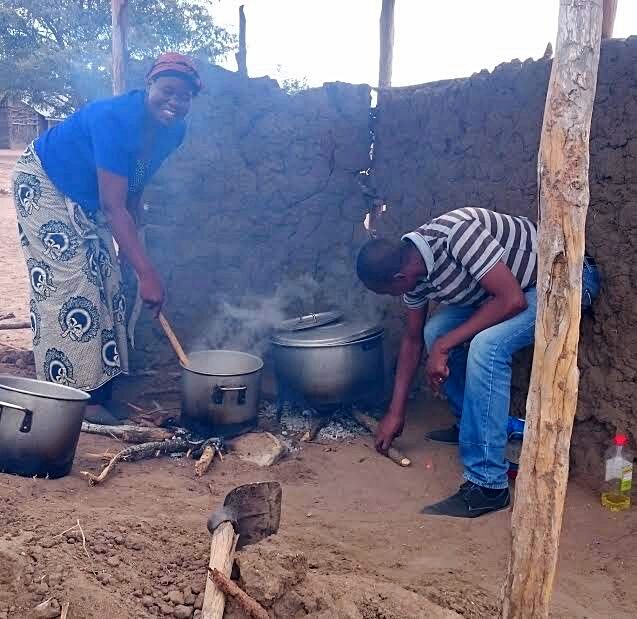
Talvina and Roberto worked with the community and helped cook the first meals. Within a month, pupils from Duvane were walking to Cumba for lunch, so Duvane joined: 605 children at 4 schools. By October teachers were reporting higher attendance and better focus, and the pilot became permanent.
When the drought ended in 2017, we kept going. A school meal works because a child can count on it day after day, and hunger here outlasts any one drought. We have never stopped serving meals at any school where we started.
No child should miss school because of hunger.
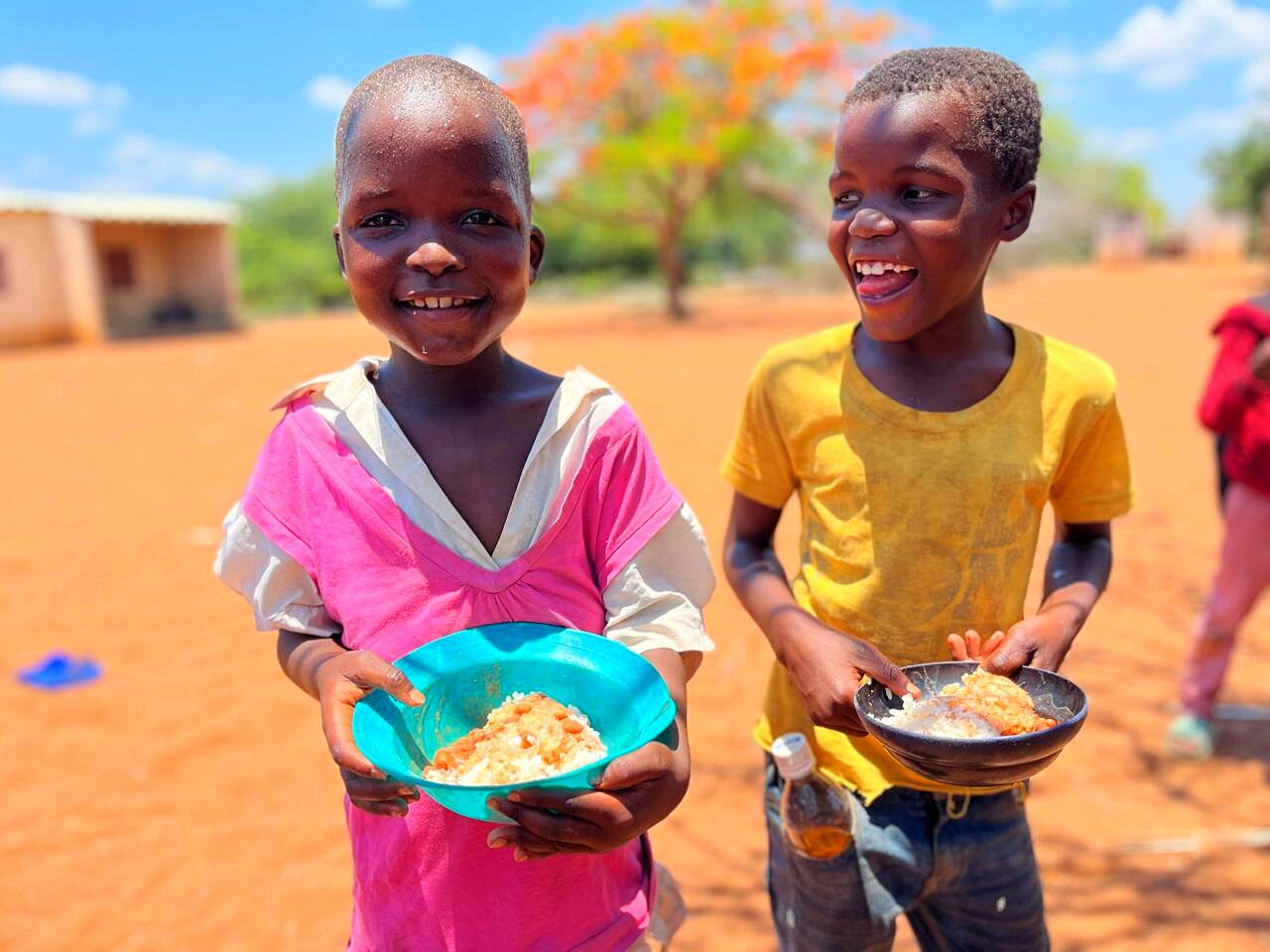
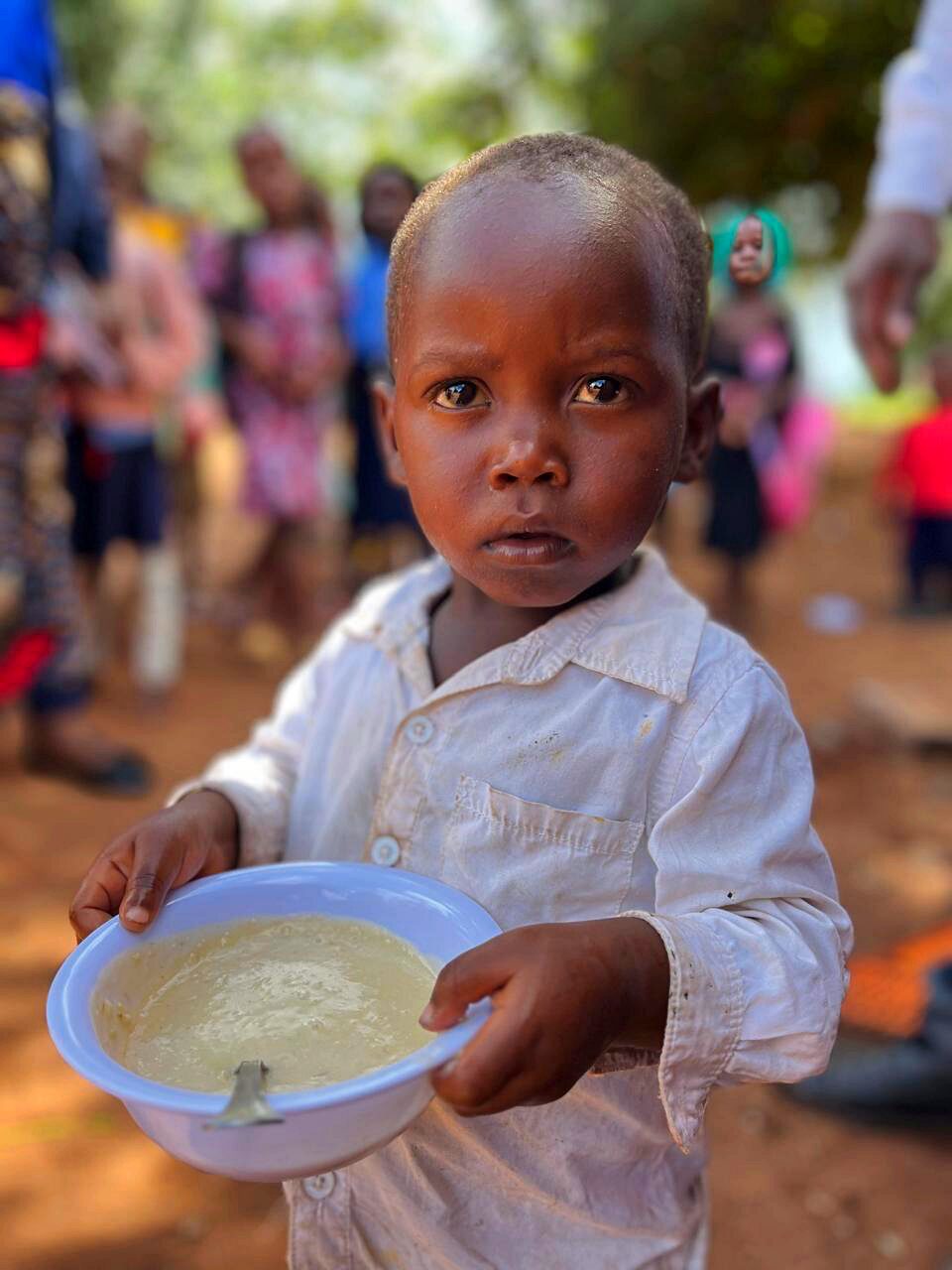
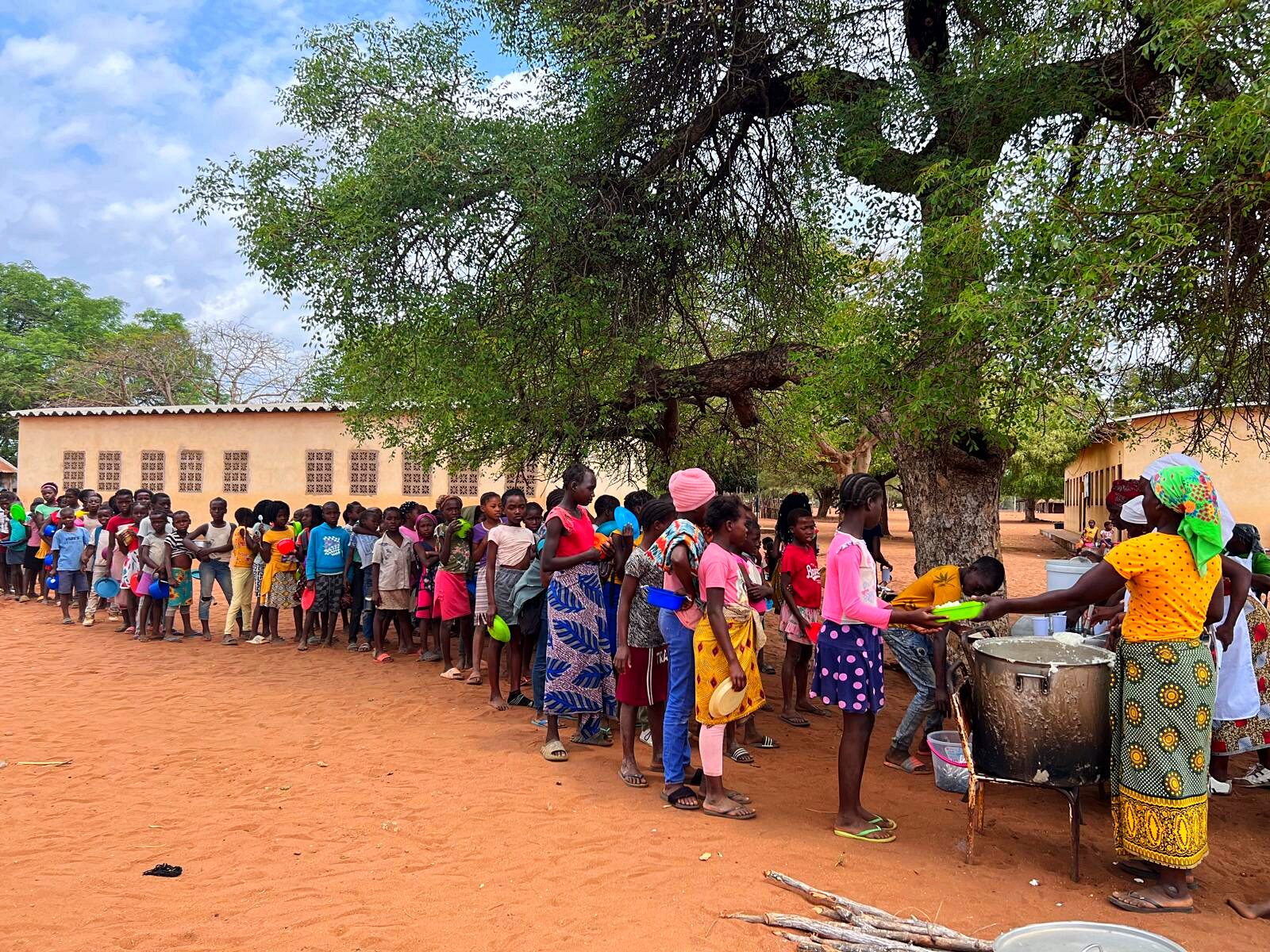
It starts with a free, hot meal at school. Women from the community cook it on site, using food from local farmers where we can. The meal is why a child comes to school every day, and no child is ever turned away from it.
Once children come every day, the same school can do more: a preschool from age three, deworming and HPV vaccination with District Health Services, and the bus, mentors and meal that keep students in secondary school. One integrated platform, from age three to grade 12.
Each program started with something we saw.
We don't arrive with a plan. Each program grew out of what our team saw at the schools and communities, always striving to make our work more impactful.
-
2016. Hungry children were leaving school, a problem exacerbated by the drought, so we began serving school lunches.
-
2017. At community meetings, farmers wanted to get involved in providing food for the school lunch program, so we began working with local cooperatives to source more of the ingredients.
-
2021. Younger siblings of students were tagging along with their older sisters and brothers, so we opened community preschools.
-
2022. Parents, teachers and students talked about how hard it was to reach secondary school, so we started Avança+, providing school buses.
-
2025. Health workers conducting annual deworming campaigns at the schools in collaboration with MSLI saw the opportunity to take advantage of the school visit to provide HPV vaccinations as well.
-
2025. Cooks wanted to make the meals more nutritious, so we started school gardens to produce fresh vegetables to add to the meals.
Run from Chókwè.
We operate from our office in Chókwè, where our team lives and is led by Executive Director Roberto Mutisse, who was born and raised in Chókwè.
In Mozambique, we are known as IMOLE, Iniciativa Moçambicana de Lanche Escolar. In the United States, we are a registered 501(c)(3) charity, so all US gifts are tax-deductible.
Key Milestones
We have never stopped providing meals at any school we started.
2016
First lunch on 23 May: 472 children at Candiza, Punguine and Cumba. Duvane's pupils walked to Cumba to eat, so by June Duvane had lunches too.
2017
Parents asked to grow the food, and the farming program began; just over 1,000 children in 5 schools.
2020
COVID-19. Schools closed on 23 March. Within weeks the lunch budget became food baskets: 970 households, 727,650 meal-equivalents by November. Staff kept full wages.
2021
The first two community preschools opened; almost 2,000 children a day.
2022
Avança+ launched, providing free school buses from rural villages to secondary school.
2024
From 10 schools to 62, adding Mabalane district; over 11,500 children a day.
2025
We opened 12 more preschools.
2026
We expanded school feeding to 4 more districts in Gaza Province, serving 30,000+ children daily.
The 2020 baskets fed families, not only pupils. They are counted as meal-equivalents, separately from school lunches.
From a first meal at three to grade 12.
US$50 feeds a child at school for a whole school year (2026).
Give