

Our programs
School Feeding
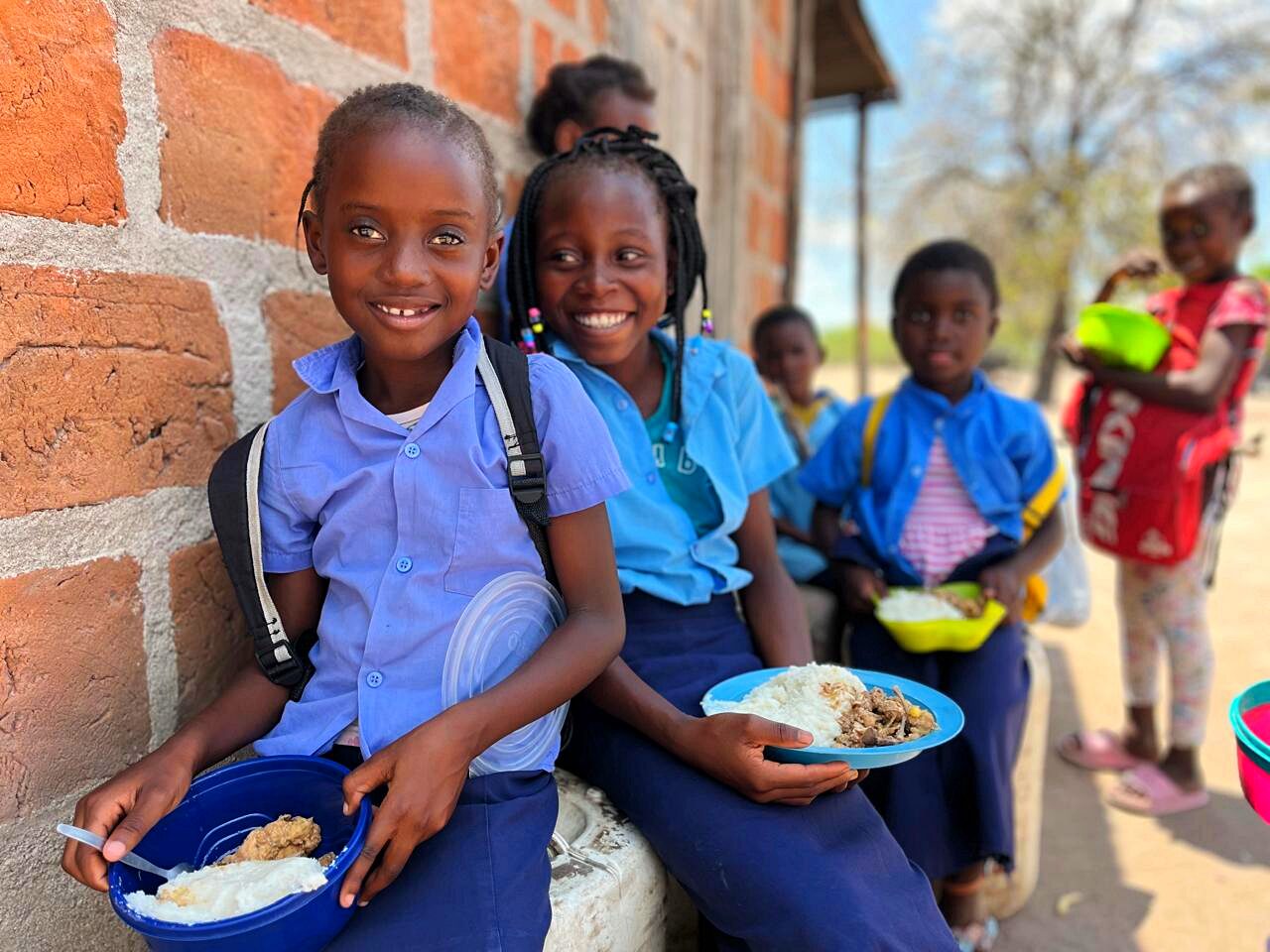
A nutritious lunch, cooked at the school and served hot to every child.
Under MSLI's school feeding program, every child eats a free, freshly cooked lunch, prepared on site by local cooks. It is the foundation on which our other programs are built: preschool, Avança+ (school buses and mentorship), and health services all reach students through the school meal.
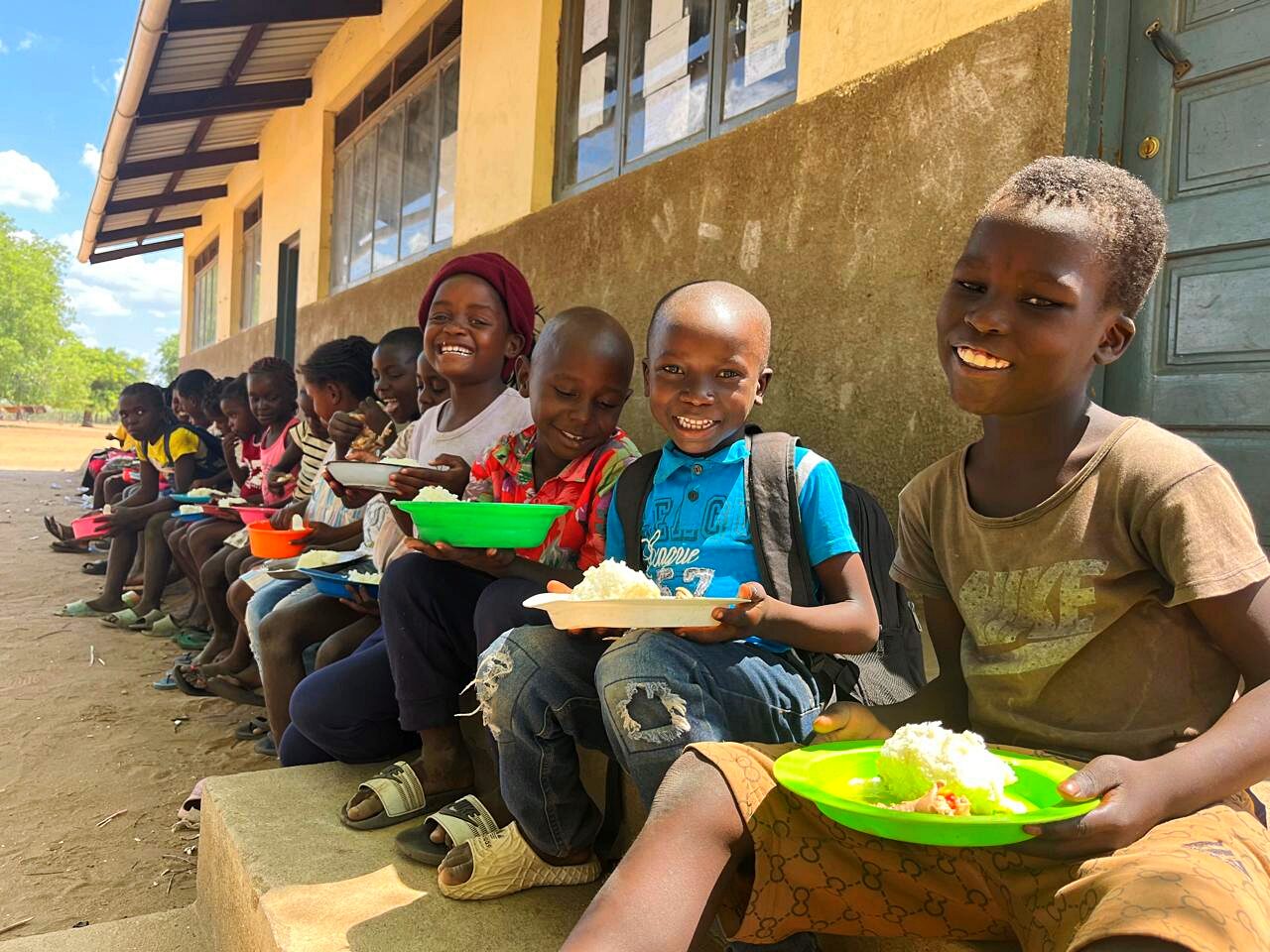
Since the first lunch in May 2016, we have never stopped serving at any school where we started.
Serving nutritious food, at school, so children can learn.
Nutritious food.
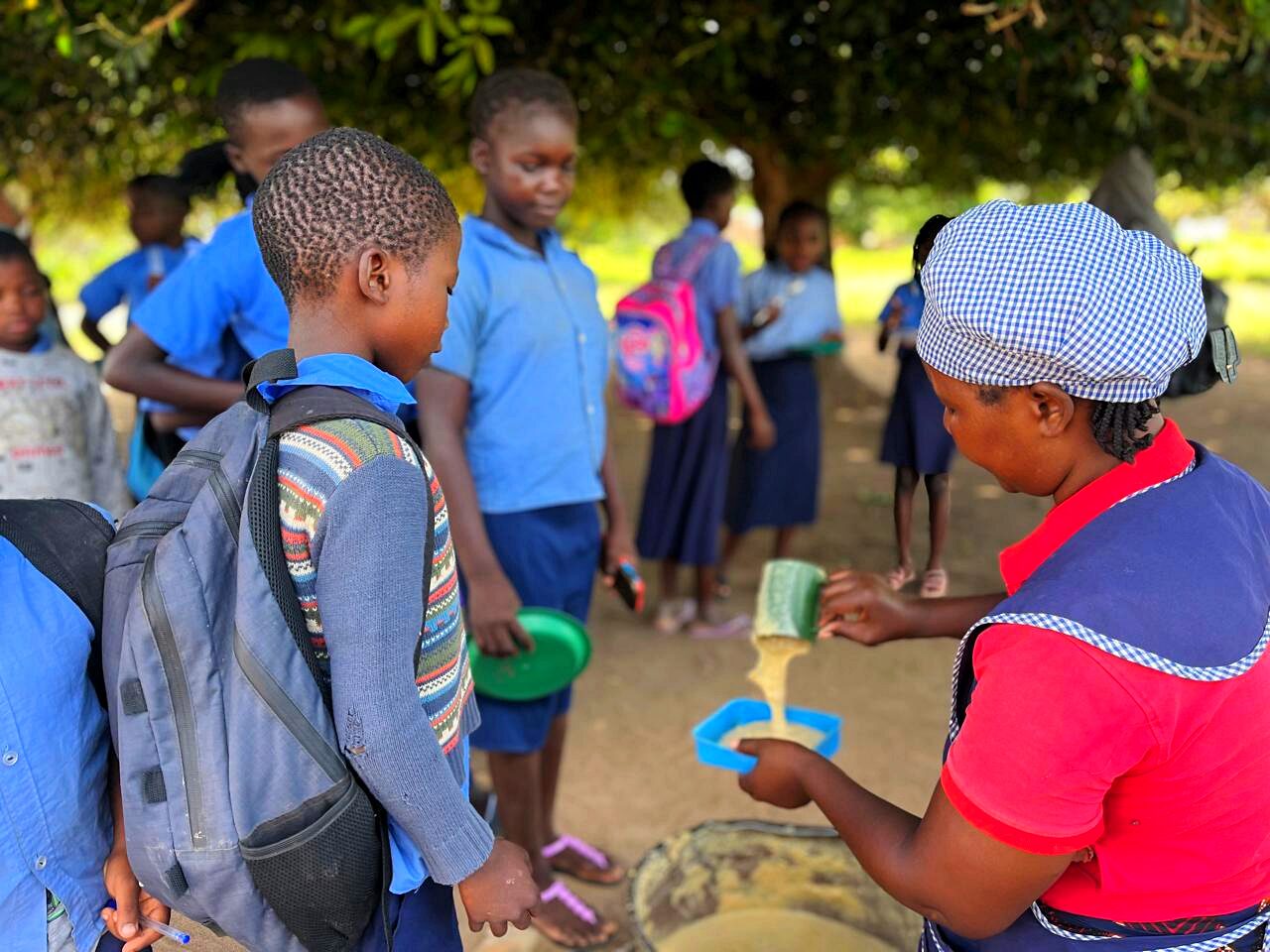
Cooked fresh on site by local cooks and served hot.
At school.
Free for every child who comes to school, every school day.
So children can learn.
A full stomach brings children to class and helps them to learn and stay focused.
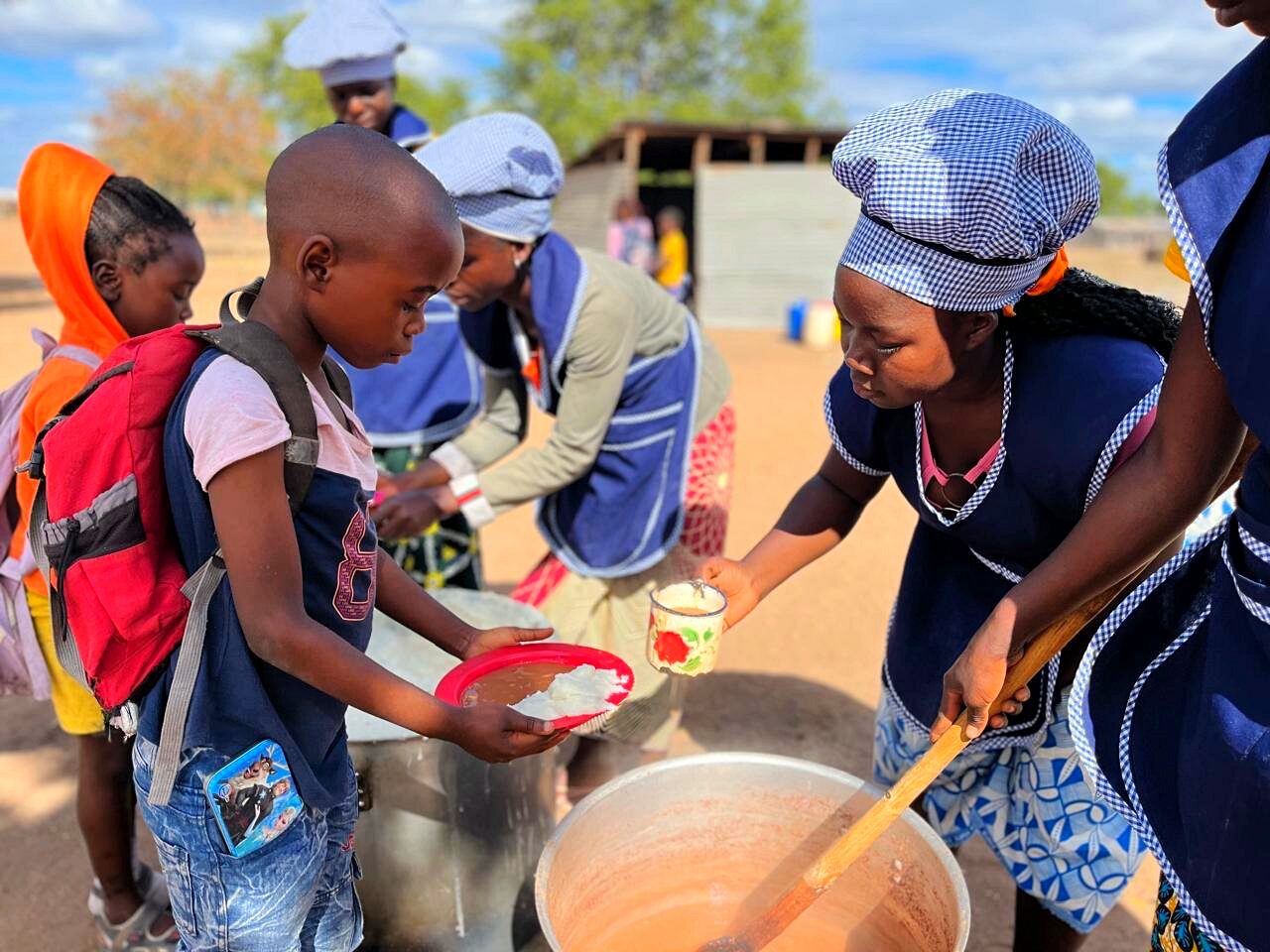
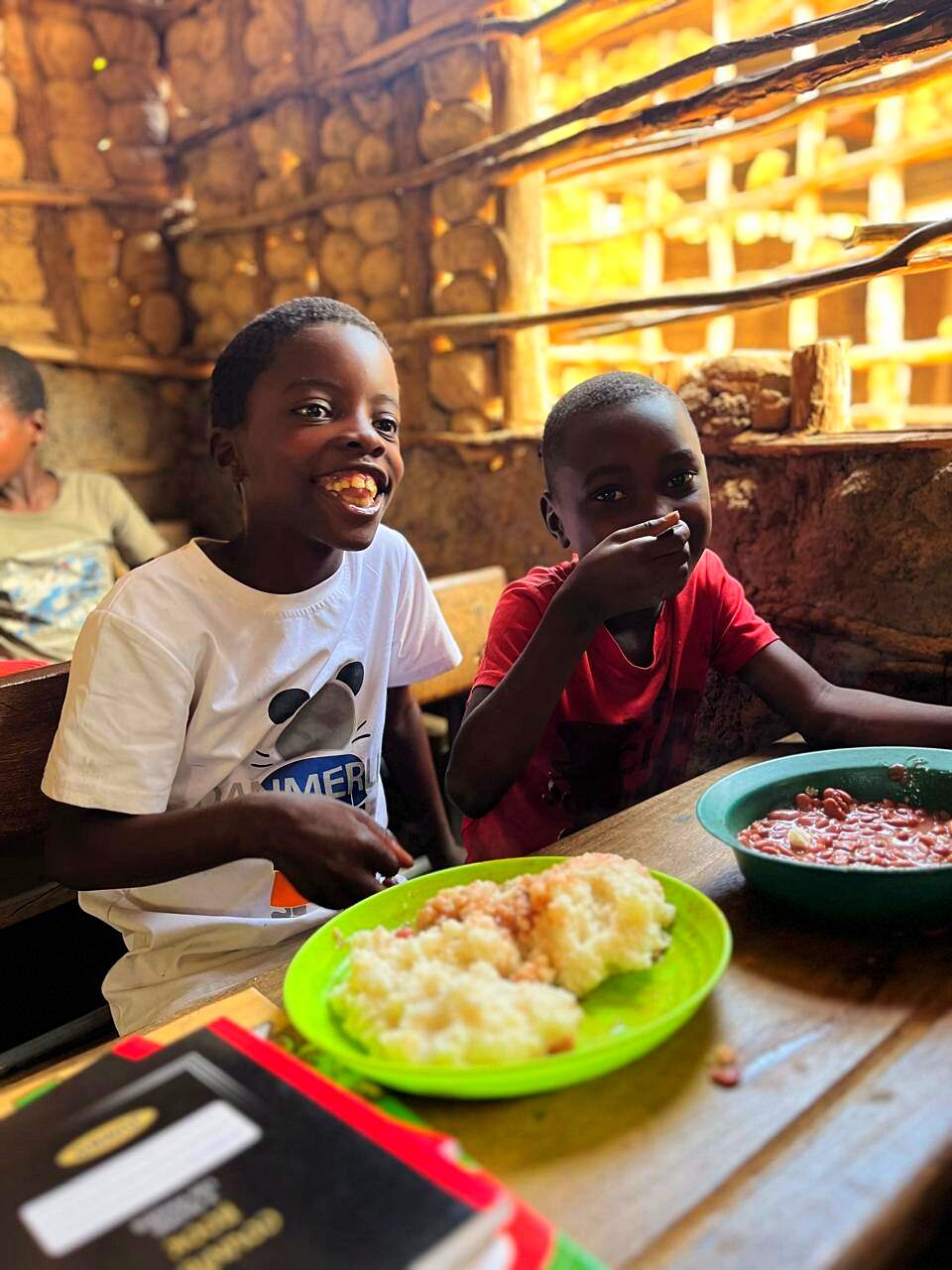
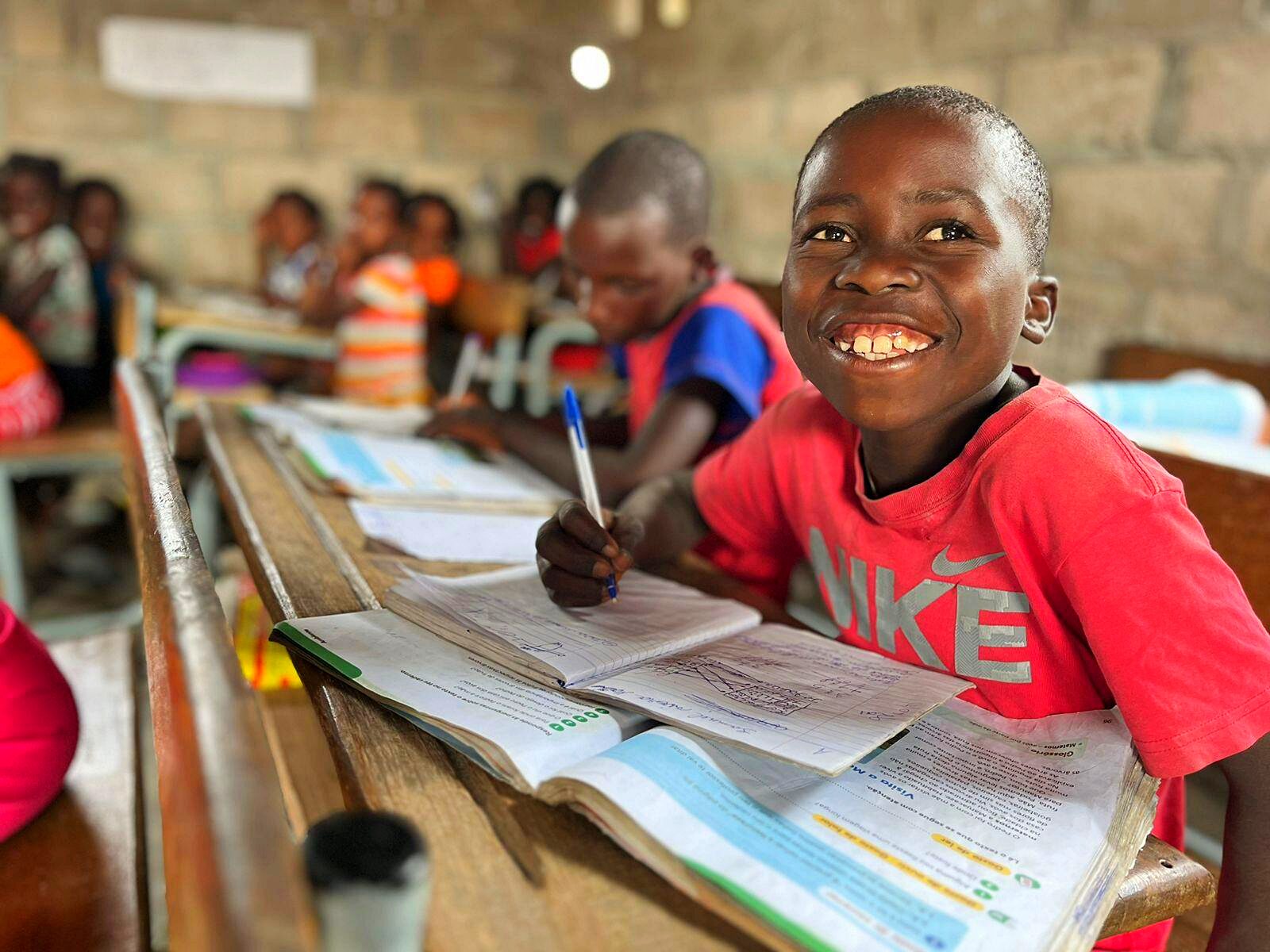
Built for rural Mozambique, built to scale.
A decentralized, community-based model.
Every school runs its own kitchen, staffed and supplied by the community around it.
A kitchen on site: run by local cooks we train.
Local food: sourced directly from Mozambican farmers whenever possible.
Biweekly visits: our staff monitor quality and consistency at every school we serve.
Quantified results: we track attendance, enrollment and growth over time.
Same model, any size school
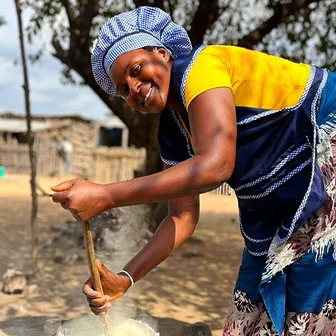 30students
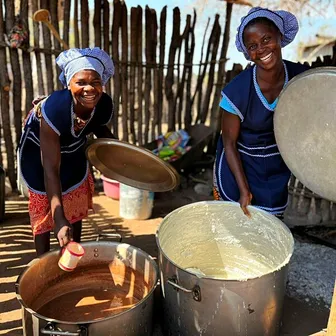 1,300students
Our model scales to serve each school, whether it has 30 students or 1,300.
Local food children already know and love.
The menu is adapted region by region, cooked fresh on site and served hot. A couple of examples:
Menu example
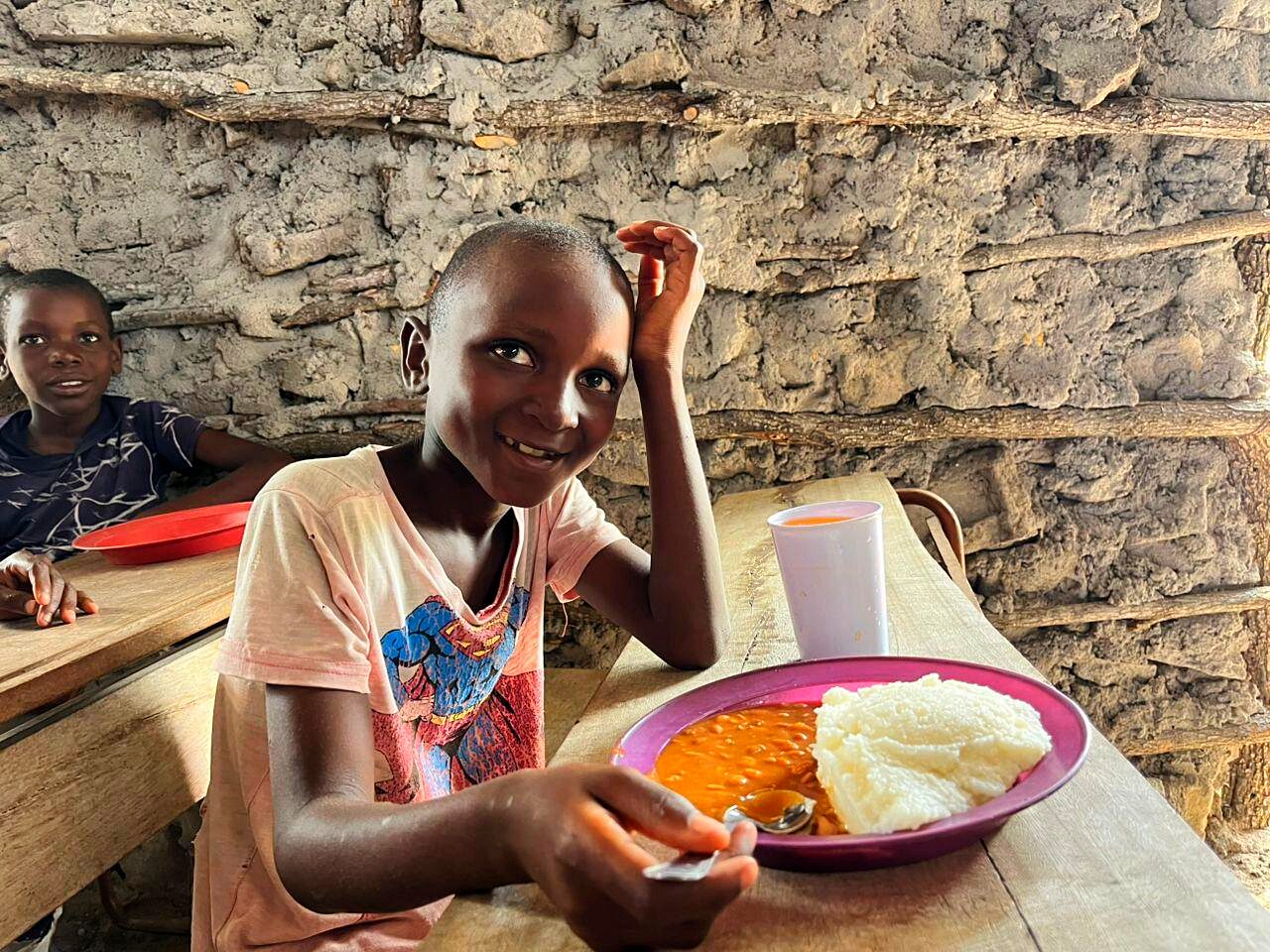
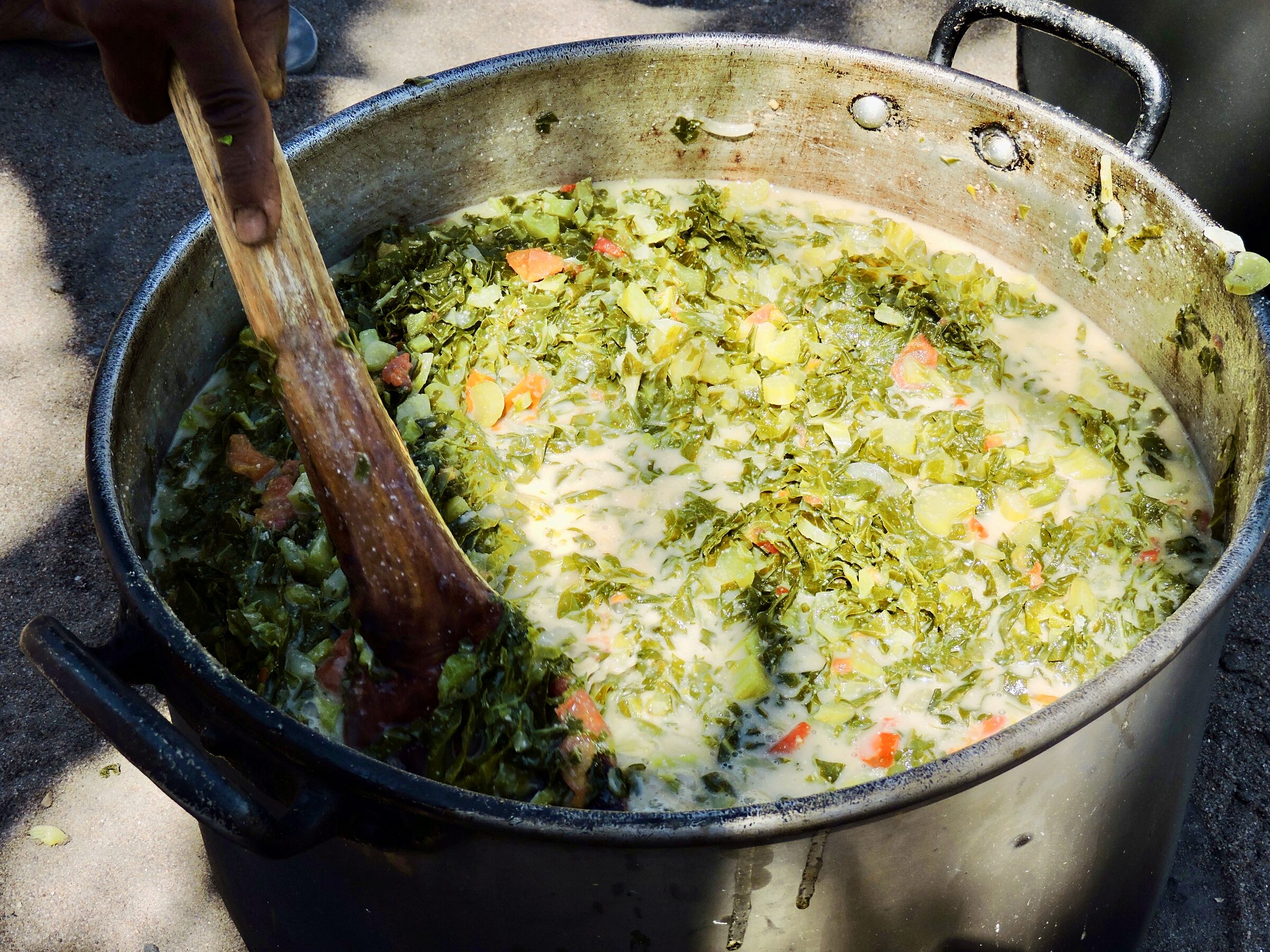
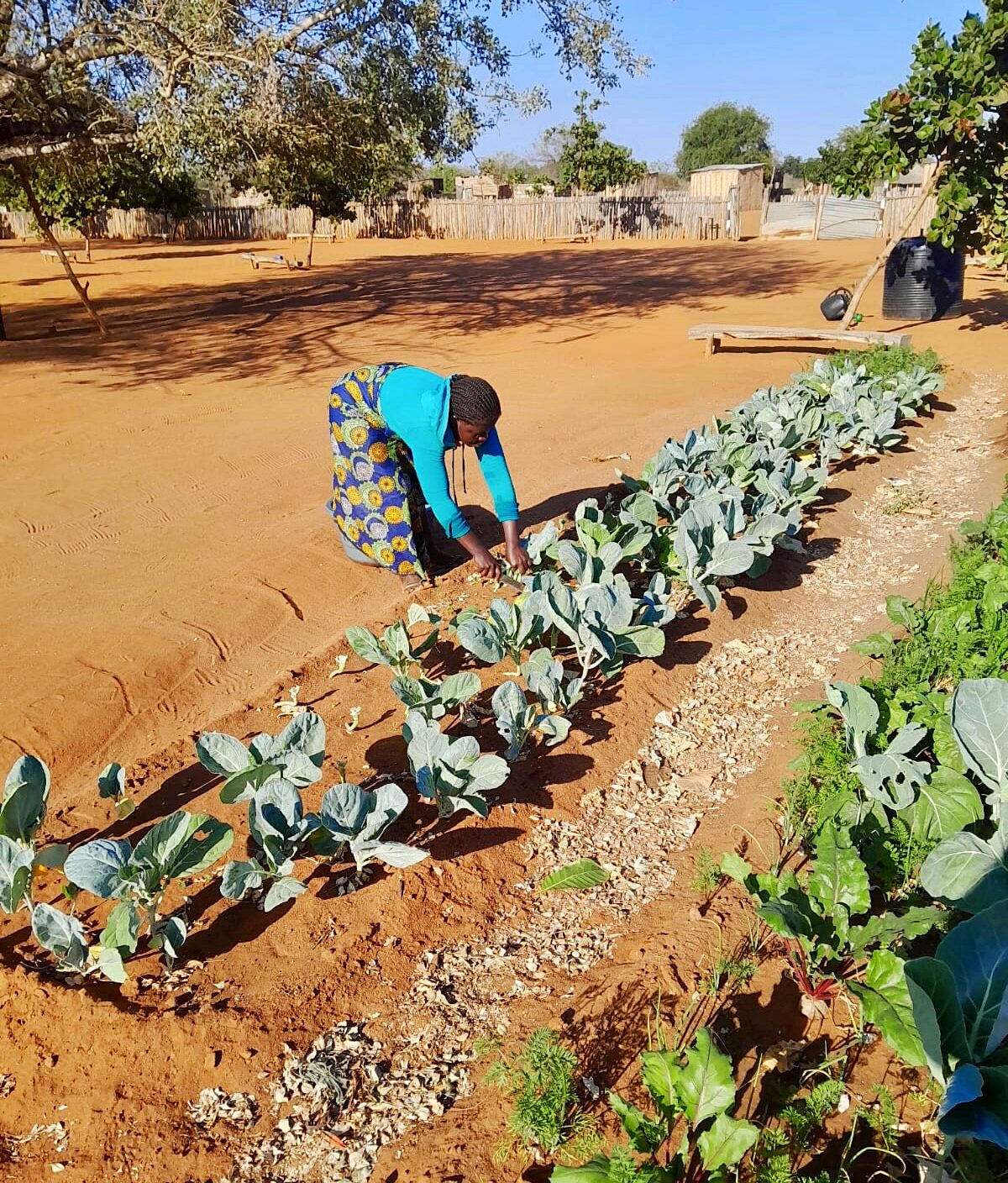
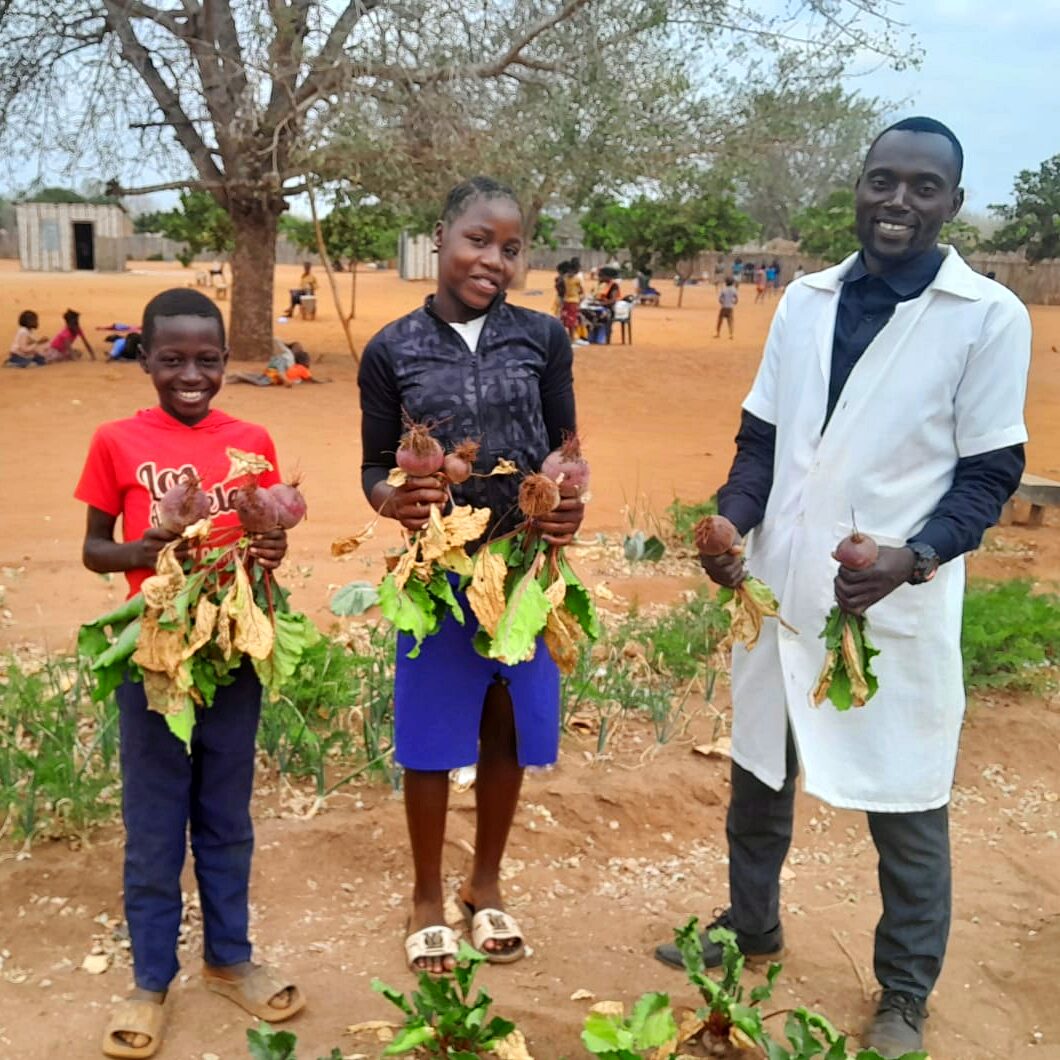
From the school garden to the school plate.
Where conditions allow, we support the creation of school gardens. Vegetables are planted, harvested and included in the lunch menu right at the school.
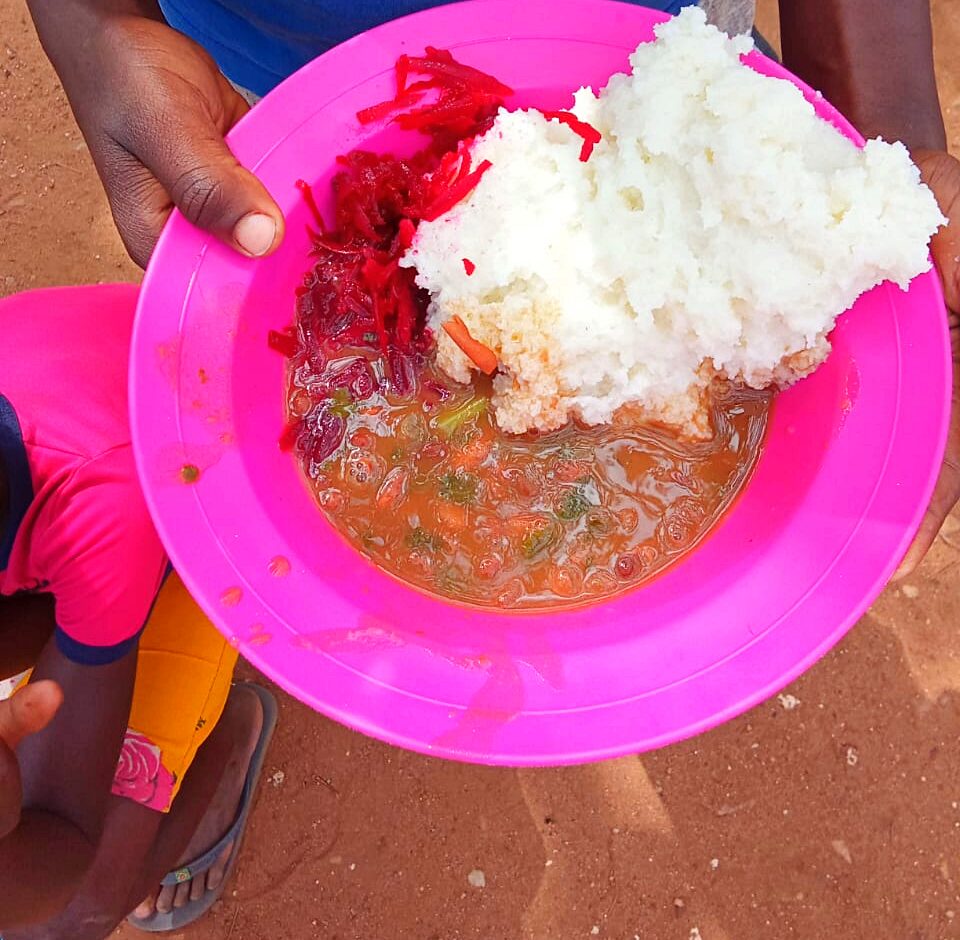
“When we talk to the students and ask them what they eat at home, it's usually xima with pumpkin leaves. The family prepares one pot in the evening, and that's what they have for dinner.”
— Talvina Ualane, Chókwè District School Feeding Program Manager
Every bag of beans starts with a Mozambican farmer.
We actively support local farmer cooperatives to grow the crops that are used in the school meals.
Take beans, an important staple of our school meals menu. By partnering with us, local farmers gain a steady, reliable buyer, and the money spent on a child's lunch stays in the community.
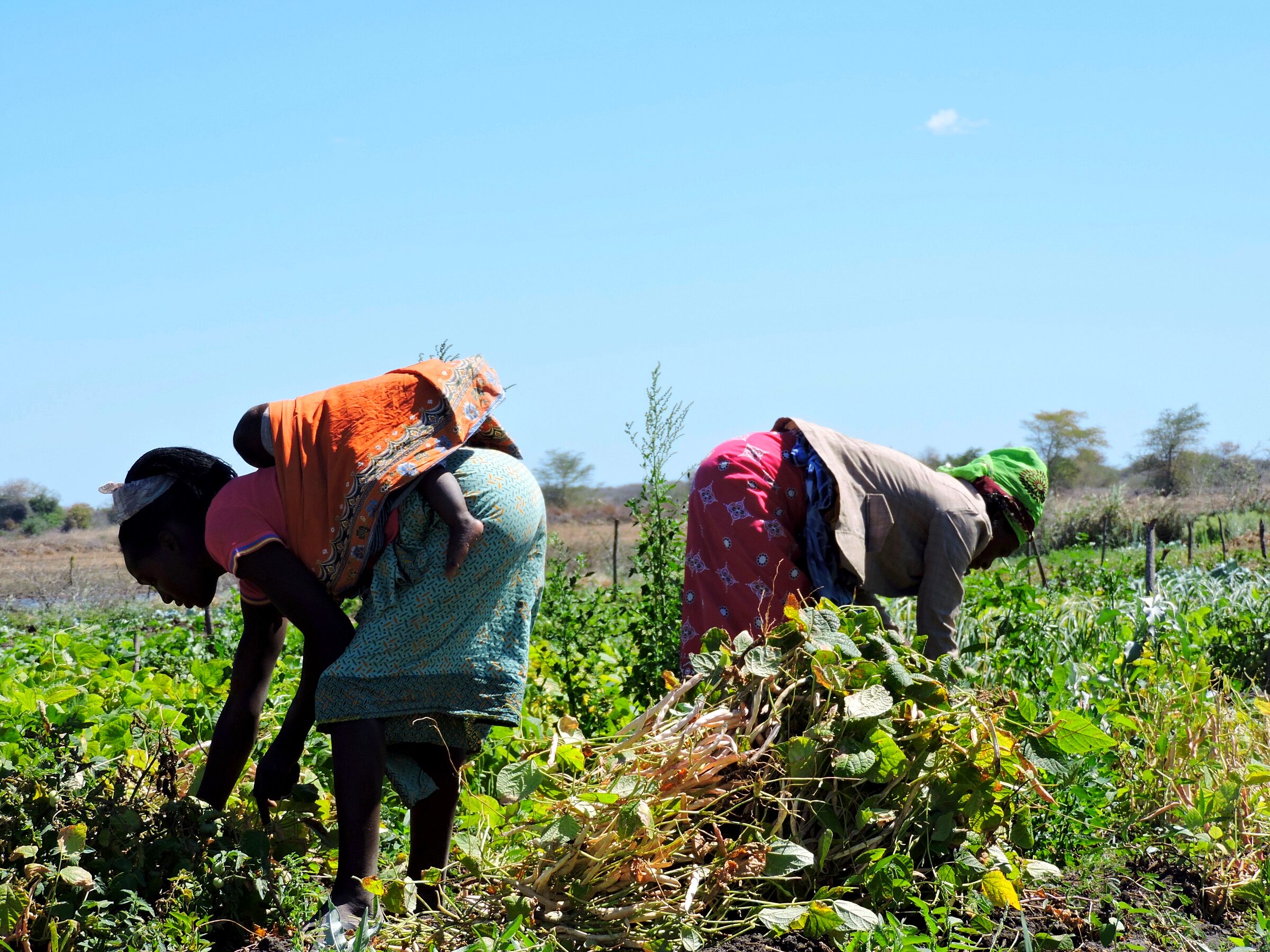
Local farmers grow beans.
Farmer groups near our schools plant and harvest ingredients.
We buy them.
A steady buyer means a steady income for farmers.
Beans are prepared for lunch.
Local cooks at each school prepare a hot lunch.
Children receive a nutritious meal.
The whole community benefits from each lunch.
The lunch brings children to school. The health team meets them there.
Because children come to school every day for lunch, they're there when government health workers arrive. We build on our school feeding network to help District Health Services bring free deworming and HPV vaccination to rural schools.
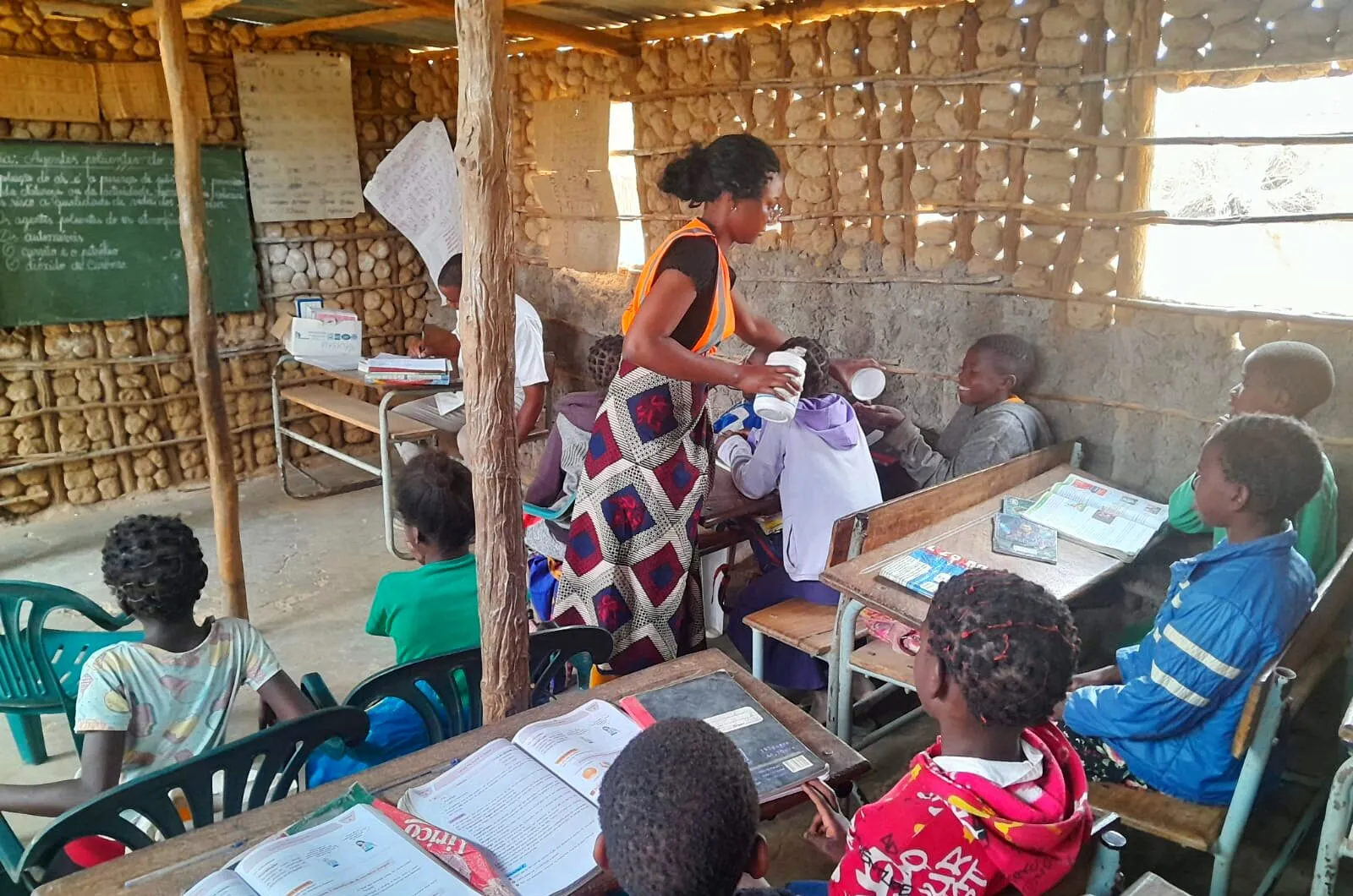
Deworming, in the classroom. 01 · Every enrolled pupil
Deworming
Where families drink from rivers and ponds, worm infections are common in children. District health workers treat them right in the classroom.
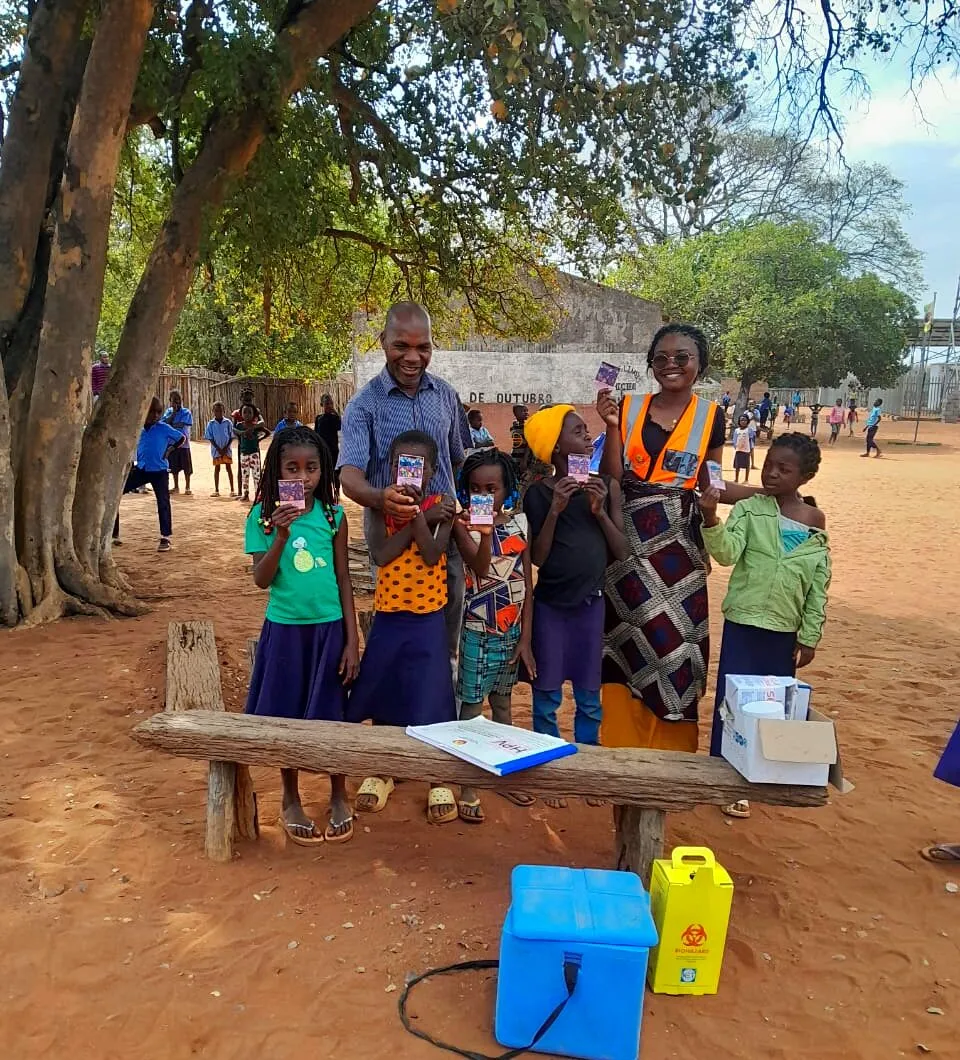
Girls with their HPV vaccination cards. 02 · Girls aged 9 and over
HPV vaccination
Cervical cancer screening and treatment are major challenges in Mozambique, so girls are vaccinated at a young age, at school.
03 · Our part
Getting the health team there.
School meals bring students to class every day, which makes school the best place to reach them to provide health care. The Health District has the technicians and supplies, and we collaborate to ensure there is transport to even the most remote schools. Deworming ensures children are able to absorb the nutrients in their meals, so every meal does more for their health and their learning.
2017
in partnership with District Health Services since October 2017
A school-based vaccine only reaches girls who are in school. By improving school attendance, the school lunch ensures that girls are in the room when the vaccine arrives.
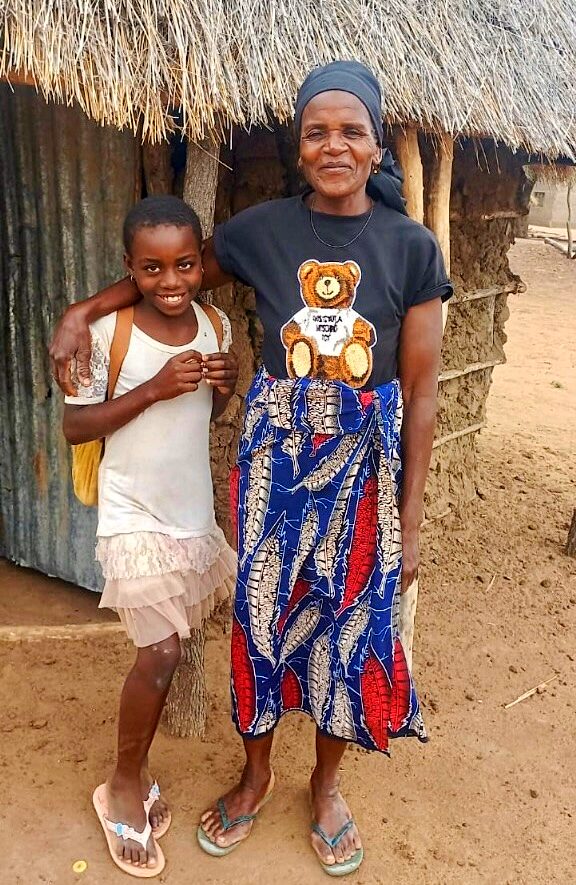
One meal at home. One meal at school. That's how they get by.
Hortencia, 10, and her brother Raúl, 7, are orphans who live with their grandmother, Florinda, in the village of Chate. Since illness forced Florinda to stop farming in 2024, the family usually eats just once a day, in the evening.
Their lunch at Chate "B" Primary School fills the gap. Without it, Florinda says, she doesn't know how her grandchildren would survive.
Both children still go to school every day, eager to learn, even without proper uniforms.
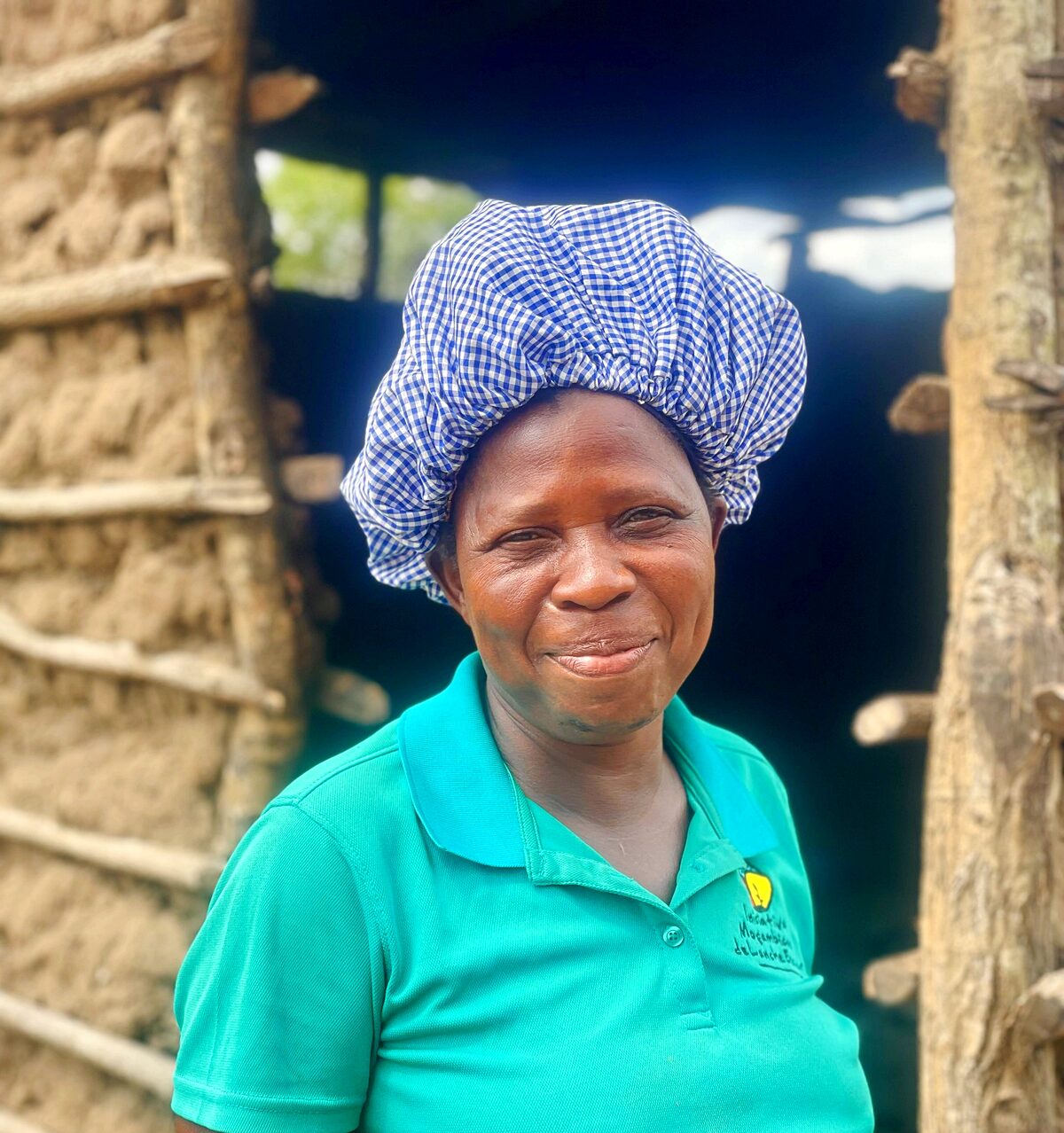
“Before the school lunch program, children would leave home in the morning, but they wouldn't make it to school. They'd go into the bush instead to look for wild fruits to eat. Now the children always come to school because of the food. I always make sure to get to the school by 6am to start cooking because I know the children are counting on me. I've become famous in my village, and I am known by all the children as Grandmother Leta.”
— Leta Ubisse, cook, Punguine Primary School
Drought, a pandemic, floods. The meals kept coming.
We began in the 2016 drought. When COVID closed schools in 2020, lunches became monthly food baskets within weeks.
In January 2026, floods delayed the school year by four weeks. We sent take-home rations, then served lunch on the first day back.
US$0.25
average cost per meal.
2026
There's no cost to a family, ever.
Nearly all of the children we serve live in poverty. For many, this is the most reliable meal of their day.
Give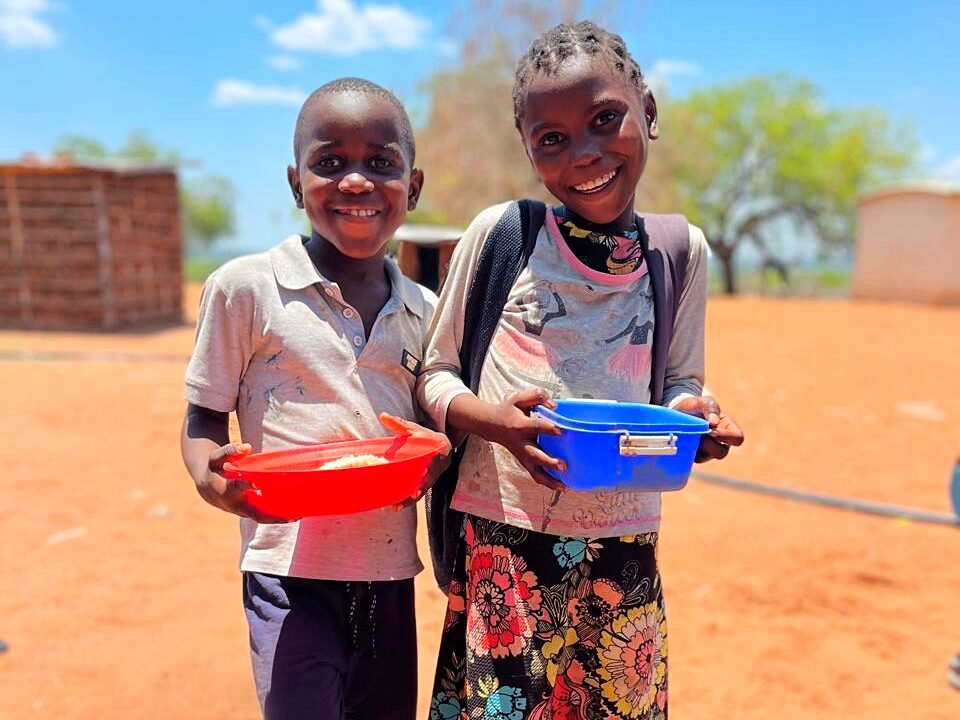
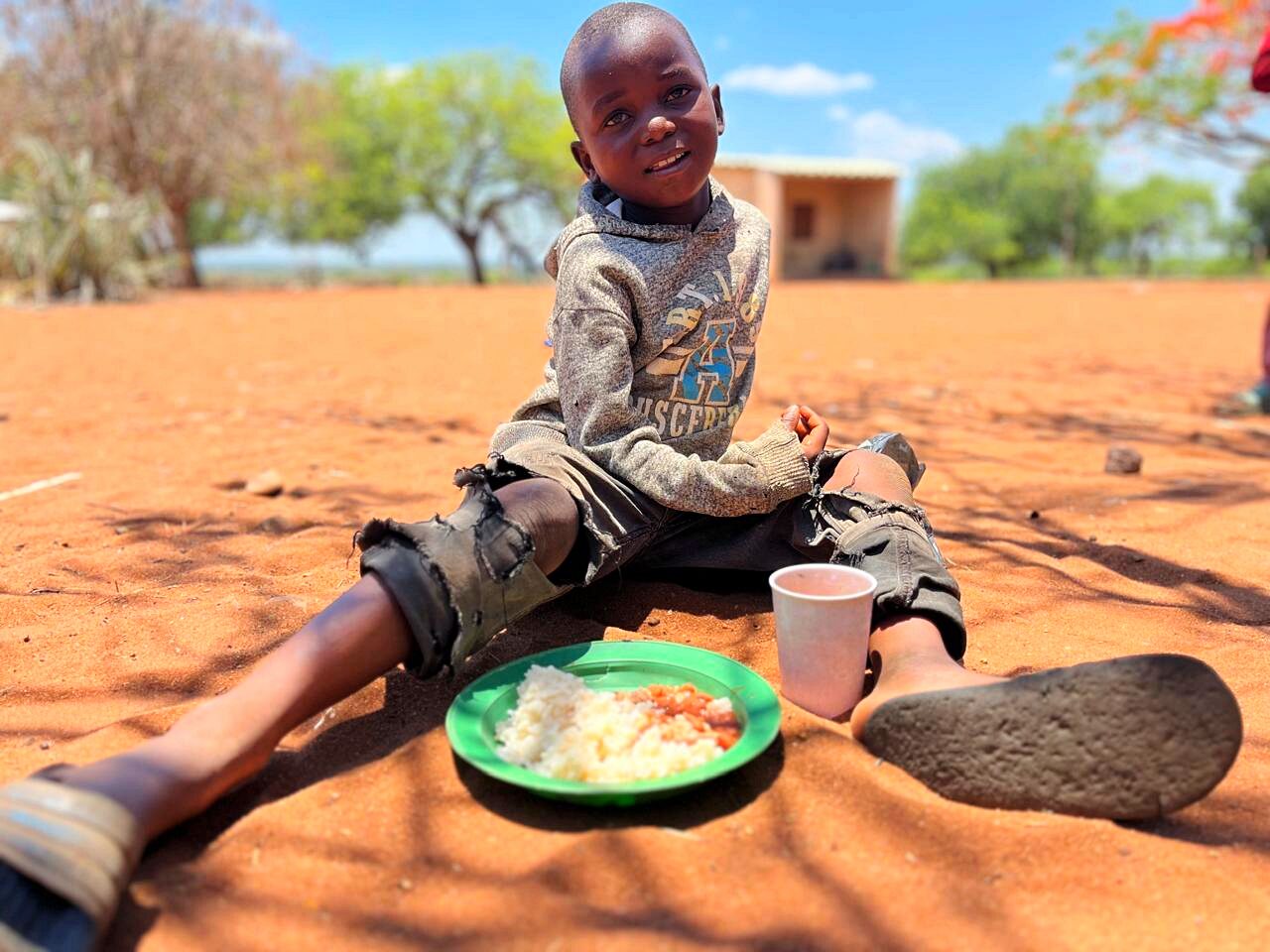
Why a school meal keeps a child in school.
A 2021 longitudinal study in Mozambique found that school meals were most strongly linked to fewer dropouts. School meals influenced dropouts more than distance to school, textbooks, reading proficiency or school director attendance ().
The UNESCO 2026 GEM Report on Mozambique shows that schools that introduced on-site meals improved enrollment and attendance, reaching up to 92% in 2024 ().
US$50 feeds a child for a full school year.
The simplest, most direct way to keep a child in school.
GivePontuschka, R. (2025). Exploring the reasons behind primary school dropout in Mozambique: Longitudinal assessment of school dropout in Mozambique 2021. Policy brief. UNICEF Innocenti – Global Office of Research and Foresight.
UNESCO (2026). Global Education Monitoring Report 2026, country case study: Mozambique.